Physics-Based Digital Twins: From Asset Data to Remaining-Life Decisions
Physics-Based Digital Twins: From Asset Data to Remaining-Life Decisions
 Belal
Belal
How Logaritm combines engineering physics and operational data to turn condition signals into defensible asset decisions.
Engineering reality, continuously updated
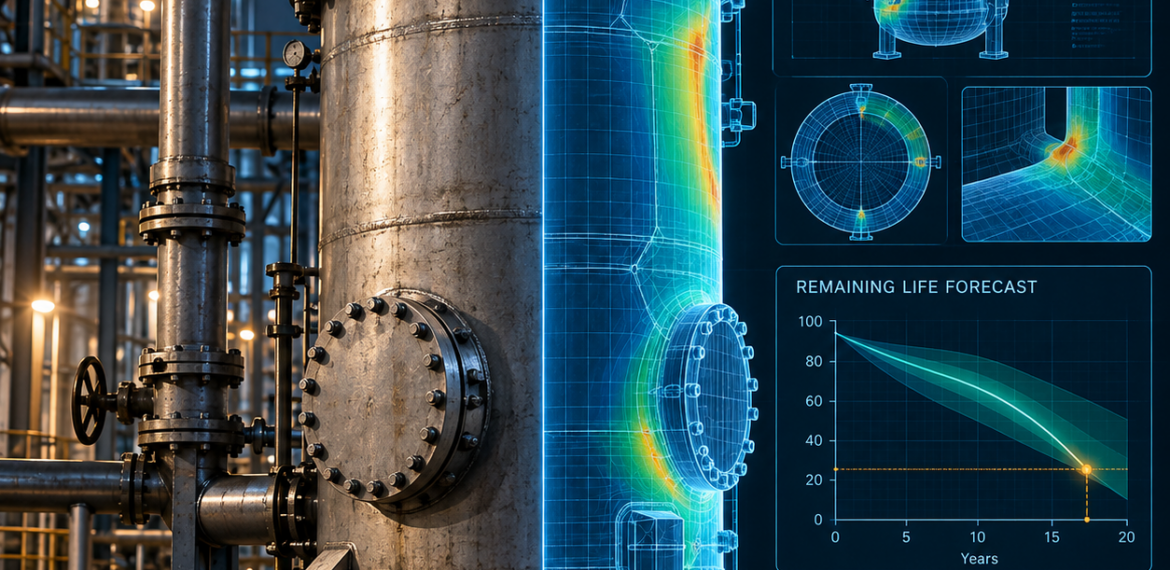
Industrial assets rarely fail because data is unavailable. They fail because inspection records, operating history, and engineering models remain disconnected. A physics-based digital twin closes that gap by representing how an asset responds to loads, temperature, pressure, degradation, and changing operating conditions.
Logaritm combines structural and thermal models with live and historical evidence. AI helps identify patterns and update forecasts, while engineering physics keeps every conclusion grounded in real failure mechanisms.
Decisions—not dashboards
The objective is not another visualization layer. It is a defensible view of condition, risk, and remaining life that helps teams prioritize inspection, repair, or operating changes before intervention becomes an emergency.
Lifecycle value
This approach supports safer operations, better maintenance timing, reduced unnecessary expenditure, and stronger lifecycle planning—from a single critical asset to an enterprise portfolio.
Discuss a focused digital-twin assessment →
Related services: Digital Twins & Condition Monitoring